Handicap Shower Installation San Antonio TX: Reclaim Your Independence at Home
There is nothing quite like the feeling of stepping into a hot, refreshing shower to wake you up in the morning or to wash away the stress of a long day. But let us face it for a moment. For many seniors and individuals living with mobility challenges, that simple daily routine can slowly transform into a source of anxiety. High bathtub walls start looking like steep mountains, and slippery porcelain tiles feel like an accident waiting to happen.
If you or a loved one are experiencing this in the Alamo City, you are certainly not alone. The good news is that you do not have to move out of your beloved home or compromise your dignity just to stay safe. A professional handicap shower installation San Antonio TX project can completely revolutionize your bathroom, turning a potential hazard zone into a secure, comfortable, and stylish oasis.
In this ultimate guide, we will walk you through everything you need to know about transforming your bathroom, choosing the right safety features, understanding the installation process, and finding the best local experts to bring your vision to life.
Why Consider a Handicap Shower Installation San Antonio TX?
Living in San Antonio means enjoying vibrant culture, warm sunshine, and strong community roots. Most local homeowners want to stay in their homes for as long as possible. That is where aging in place comes into play. Upgrading your bathroom is usually the very first step in making a home safe for the long haul.
Here are a few compelling reasons why investing in a walk-in or roll-in shower makes all the sense in the world:
- Unbeatable Safety and Fall Prevention: Falls are the leading cause of injury among older adults, and the bathroom is statistically the most dangerous room in the house. Eliminating the need to step over a tall tub wall reduces the risk of slipping dramatically.
- Regained Independence: Needing assistance for basic hygiene can feel frustrating. An accessible shower allows individuals to bathe self-sufficiently, boosting confidence and mental well-being.
- Future-Proofing Your Home: Even if you only have minor mobility issues today, planning ahead ensures your home remains functional as your needs change over time.
- Modern Aesthetic Appeal: Gone are the days when accessible bathrooms looked cold and clinical like a hospital room. Today’s handicap showers are modern, sleek, and can actually boost your home’s resale value.
Essential Features of an Accessible Bath Space
Designing a shower that fits your specific physical requirements involves more than just ripping out an old tub. It requires a thoughtful mix of clever layout design and specialized safety equipment. Let us take a close look at the key elements that make a handicap shower truly functional.
1. Barrier-Free and Low-Threshold Entry
The hallmark of any accessible shower is how you enter it. Traditional showers have a curb that you must step over, which can easily catch a foot. A low-threshold entry lowers that barrier to an inch or less. If you use a wheelchair or walker, a zero-threshold or roll-in shower removes the curb entirely, creating a seamless transition from the bathroom floor right into the stall.
2. Sturdy Grab Bars
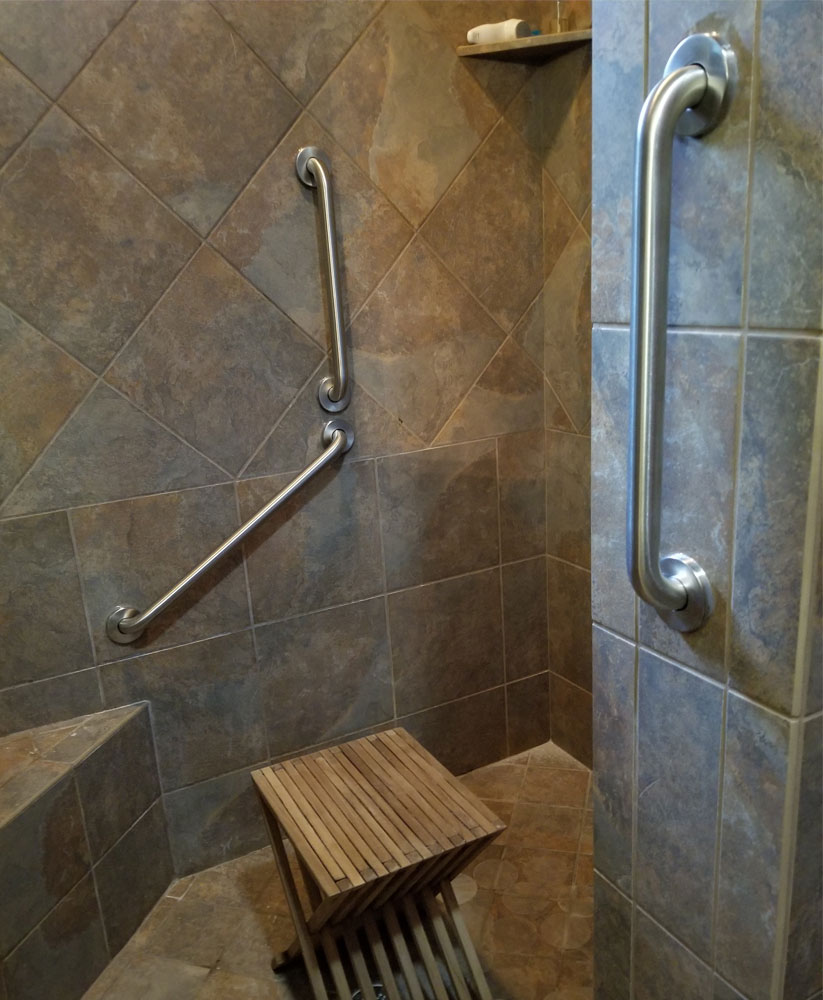
Forget flimsy towel racks that pull right out of the drywall when you lean on them. Heavy-duty, ADA-compliant grab bars are anchored directly into the wall studs. They give you solid leverage when standing up, sitting down, or balancing while washing your hair.
3. Built-In or Fold-Down Seating
Standing for long periods can be exhausting or painful if you struggle with joint pain, arthritis, or endurance issues. A secure shower seat lets you sit back, relax, and wash comfortably. Fold-down benches are fantastic because they can be tucked away against the wall when someone else in the family wants to stand.
4. Handheld Showerheads with Accessible Controls
Fixed showerheads force you to move to where the water is flowing. A handheld showerhead attached to a long, flexible hose brings the water directly to you. Combine this with easy-to-reach lever handles or push-button controls, and bathing becomes a breeze whether you are standing or seated.
5. Slip-Resistant Flooring
Water and smooth tile surfaces simply do not mix well. Accessible showers utilize textured acrylic surfaces or smaller mosaic tiles with extra grout lines to create traction underfoot, keeping you firmly planted even when things get soapy.
What to Expect During a Handicap Shower Installation San Antonio TX
Taking on a home renovation can feel intimidating, but working with experienced local specialists makes the process surprisingly smooth. Understanding the steps involved helps relieve stress and ensures you know exactly what is happening from start to finish.
Step 1: The Initial In-Home Consultation
Every individual has unique physical needs, and every bathroom has a different footprint. The project begins with a contractor visiting your home. They will measure your current bathroom, discuss your specific mobility challenges, and help you select materials, colors, and safety accessories.
Step 2: Demolition and Space Preparation
Once the plans are finalized, the installation crew gets to work removing your old bathtub or existing shower enclosure. They will inspect the subflooring and wall studs for any hidden water damage, mold, or rot to ensure the structural foundation is rock solid.
Step 3: Plumbing and Structural Modifications
Next comes the behind-the-scenes work. Plumbers will adjust the drain location if necessary, upgrade pipework, install anti-scald mixing valves to prevent severe hot water burns, and reinforce the wall framing so that grab bars and seats can support heavy weight loads safely.
Step 4: Installation of Base, Walls, and Fixtures
Depending on your preferences, the team will install either a custom tile surround or a seamless, low-maintenance acrylic wall system. Acrylic is incredibly popular in San Antonio because it resists mold, mildew, and hard water stains, making it effortless to clean.
Step 5: Final Inspection and Walkthrough
Before calling the job done, the crew tests every fixture, ensures the drainage works perfectly, cleans up the workspace, and walks you through how to operate and care for your new shower equipment.
Choosing the Right Local Contractor in San Antonio
Not every general contractor understands the fine details of accessible design. When you are looking for someone to perform a handicap shower installation San Antonio TX, you want a team that combines construction expertise with genuine empathy for safety needs.
Here are a few tips to help you choose the right professional:
- Look for Specialized Experience: Ask if the contractor specializes in aging-in-place remodeling or ADA-compliant designs. Certified Aging-in-Place Specialists have specialized training in modifying homes for seniors.
- Check Local Reviews and References: Read feedback from other homeowners right here in San Antonio. Look for comments about punctuality, cleanliness, communication, and overall quality of work.
- Verify Licensing and Insurance: Always make sure the contractor carries full liability insurance and proper state licensing to protect your property during construction.
- Ask About Warranties: A reputable installer stands behind their craft and will offer strong warranties covering both materials and labor.
Maintaining Your Accessible Shower for the Long Haul
Once your new shower is up and running, keeping it pristine takes very little effort. If you opted for high-quality acrylic walls, a simple wipe down with a mild cleaner and soft cloth keeps water spots away. For tile installations, keeping grout lines sealed annually prevents moisture from creeping behind the walls. Regularly check grab bars and seat mounts to ensure all hardware stays tight and firm over time.
Conclusion
Upgrading your bathroom is far more than just an aesthetic home improvement project. It is a powerful investment in your safety, comfort, self-reliance, and peace of mind. Taking the step toward a high-quality installation ensures you can enjoy your daily routine safely without fear of slips or falls. By working with skilled local professionals who understand your needs, you can transform your routine bathing space into a safe haven tailored entirely to your lifestyle.
Frequently Asked Questions
Q1: How long does a typical handicap shower installation take?
A: Depending on the complexity of the project, a standard conversion (replacing an existing tub with an acrylic walk-in shower) can often be completed in just one to two days. Custom tile installations or complete bathroom reconfigurations typically take anywhere from three to five business days.
Q2: Will installing a handicap shower lower my home’s resale value?
A: No, in fact, it often does the opposite. Accessible features are highly sought after by an aging population. Modern, curb-free shower designs look luxurious and contemporary, making them attractive to buyers of all ages and abilities.
Q3: Does Medicare cover the cost of a handicap shower installation?
A: Original Medicare (Parts A and B) generally does not cover home modifications like walk-in showers or grab bar installations, as they are considered home improvements rather than medical equipment. However, some Medicare Advantage plans, long-term care insurance policies, or local veterans’ assistance programs may offer financial coverage or reimbursements.
Q4: What is the main difference between a walk-in shower and a roll-in shower?
A: A walk-in shower typically features a low threshold (around 1 to 4 inches high) that is easy to step over. A roll-in shower has a completely flush, zero-barrier entry, allowing a wheelchair or transport chair to roll straight inside without any obstruction.
Q5: Can any standard bathtub be converted into an accessible shower?
A: Yes, virtually any standard bathtub alcove can be converted into an accessible shower. Professional installers remove the old tub and utilize the existing footprint and plumbing locations to minimize construction hassle and lower overall costs.