bathroom subfloor repair cost Eugene OR
Ever stepped out of the shower, put your weight down, and felt the floor give a terrifying little squish beneath your feet? If your bathroom floor feels like a sponge or has developed a mysterious, ominous tilt, you are not alone. Here in Eugene, Oregon, where moisture practically lives with us nine months out of the year, subfloor problems are almost a rite of passage for homeowners. But before you panic and picture your toilet dropping into the basement like a scene from a cartoon, let us talk about what it actually takes to fix it—specifically, the real-world bathroom subfloor repair cost Eugene OR contractors will quote you.
Fixing a compromised subfloor isn’t just about making your bathroom look pretty again; it is about protecting the structural integrity of your home. Whether you are dealing with a slow leak from an old wax ring, shower water creeping under cheap vinyl, or full-blown Pacific Northwest dry rot, getting a handle on the costs will help you plan your budget without losing your mind.
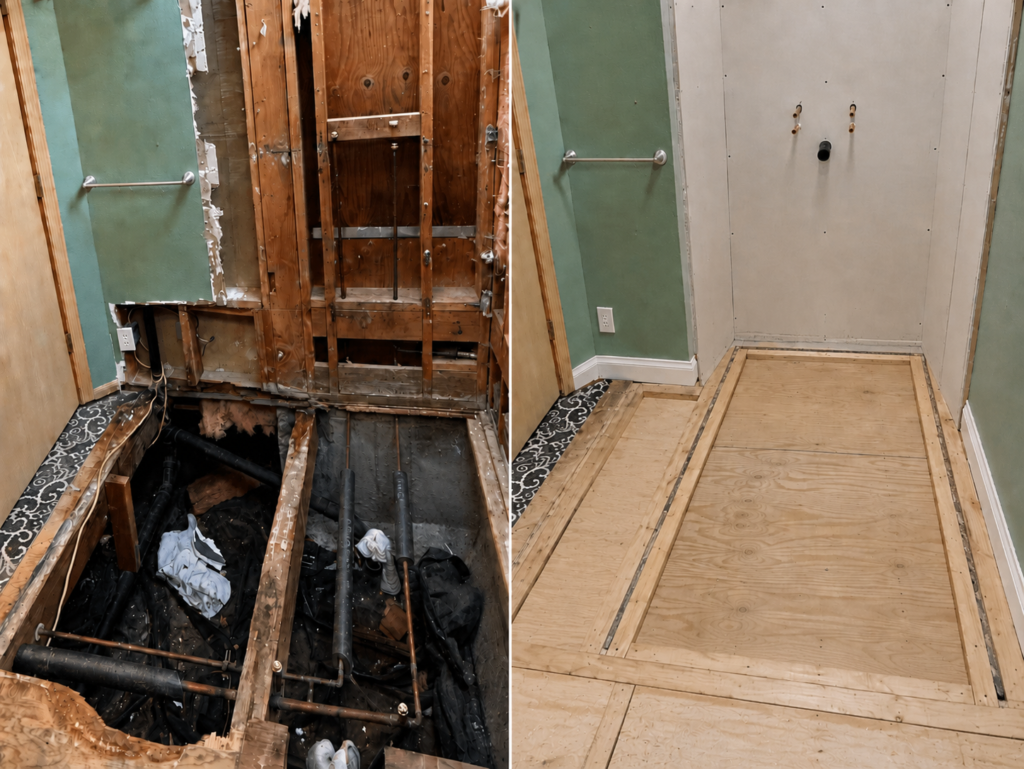
Average Bathroom Subfloor Repair Cost Eugene OR Homeowners Expect
Let us cut straight to the chase. How much is this going to cost your wallet? On average, the bathroom subfloor repair cost Eugene OR homeowners face ranges between $800 and $3,500. However, depending on the severity of the damage, projects can drop as low as $400 for a simple patch job or climb upwards of $5,000+ for a total structural overhaul.
Because every house in Eugene—from historic bungalows in the Whiteaker neighborhood to mid-century modern homes in the South Hills—has its own quirks, costs vary widely. Here is a general breakdown of what you might look at based on the extent of the repair:
- Minor Patch Repairs ($400 – $900): This usually involves replacing a small section of rotted plywood around a toilet or near a tub edge. The leak was caught early, and the underlying floor joists are still rock solid.
- Moderate Subfloor Replacement ($1,000 – $2,500): This scenario requires tearing up the majority of the bathroom subfloor, replacing multiple sheets of OSB or plywood, and doing minor repairs or reinforcement (sistering) to one or two support joists.
- Major Structural Reconstruction ($2,500 – $5,500+): The nightmare scenario. Water has leaked undetected for months or years. The subfloor is completely destroyed, dry rot has spread into multiple floor joists, and potentially even into the wall plates. This requires extensive demolition, structural framing, plumbing resets, and brand-new underlayment.
In the Eugene metro area, local labor rates for licensed general contractors or specialized rot repair professionals typically run between $65 and $120 per hour. Since labor accounts for roughly 60% to 70% of the total bill, the complexity of your bathroom layout plays a massive role in final pricing.
Why Bathroom Subfloors Fail in the Willamette Valley
Living in the Willamette Valley means living with water. Humidity, damp winters, and steady rainfall create the ideal environment for organic timber to decay if moisture finds a way in. But nature isn’t the only culprit. Bathroom subfloors usually fail due to a combination of design flaws and unnoticed household accidents.
Think of your subfloor as the unsung hero of your bathroom. It is the thick horizontal platform—usually made of plywood or oriented strand board (OSB)—that rests directly on your floor joists. On top of the subfloor sits your finished flooring, like tile, luxury vinyl plank (LVP), or linoleum. When water sneaks past the top layer, your subfloor acts like a wooden sponge. It absorbs the liquid, swells, delaminates, and eventually loses all structural strength.
The primary culprits in Eugene homes include:
1. Failed Toilet Wax Rings: This is public enemy number one. Every time you flush, a tiny splash of water escapes under the base of the toilet. Because it happens hidden beneath porcelain, you might not notice it until the floor around the toilet bowl feels soft.
2. Shower and Tub Surround Leaks: Missing grout, cracked caulk, or leaky shower pans allow water to trickle down behind tiles and straight onto the subfloor below.
3. Pacific Northwest Dry Rot: Contrary to its name, dry rot actually needs moisture to start. It is caused by a specific species of fungus that digests the parts of the wood that give it strength and stiffness. Once established, it can spread through timber like wildfire, even moving into neighboring dry wood.
Key Factors Influencing Bathroom Subfloor Repair Cost Eugene OR
When a local contractor comes out to give you an estimate, they are looking at several distinct variables. Understanding these factors will help you make sense of why your quote looks the way it does.
1. Extent of Water Damage and Rot
Water travels along the path of least resistance. A leak that started at your sink might have traveled six feet across the room to pool under your tub. If the damage is localized to a 2×2 foot square around your toilet, fixing it is fast and relatively cheap. But if the rot has migrated into the structural joists, your contractor will need to “sister” new joists alongside the damaged ones or replace them entirely, which significantly jack up labor hours.
2. The Type of Existing Finished Flooring
Before a worker can touch your damaged subfloor, they have to rip off whatever is sitting on top of it. Demolition costs vary depending on what you have installed:
- Sheet Vinyl or LVP: Quick and easy to tear out, keeping labor costs low.
- Ceramic or Porcelain Tile: Labor-intensive to break up and remove. Tile also requires thick cement board or uncoupling membranes underneath, which adds to the cleanup time and disposal fees.
- Hardwood or Natural Stone: Extremely heavy, tedious to strip away, and guaranteed to increase your overall invoice.
3. Accessibility and Bathroom Layout
Is your bathroom on the ground floor over a spacious crawlspace, or is it on the second story of a townhouse? If a contractor can crawl under your home to inspect joists from below, repairs might be smoother. However, if space is tight, or if plumbing fixtures like clawfoot tubs, heavy double vanities, and custom tiled showers must be completely disconnected and hauled out of the room, labor costs will scale up quickly.
4. Material Choices
Standard 3/4-inch exterior-grade plywood or tongue-and-groove OSB is relatively affordable. However, many homeowners choose to upgrade to marine-grade plywood or specialized water-resistant subfloor panels (like Advantech) during a repair to prevent future rot. Throw in cement backer boards for tile installation, fasteners, joist hangers, and mold-remediation sprays, and material costs can add up to $300 – $800 for a medium-sized bathroom.
Can You Repair a Subfloor Yourself to Save Cash?
If you are a handy DIYer who knows how to operate a circular saw, a reciprocating saw, and a level, you might be tempted to tackle this job over a weekend. After all, doing it yourself eliminates the labor cost, dropping your expenses down to just materials—around $150 to $400.
However, bathroom subfloor repair is notoriously tricky for a few reasons:
Plumbing Hazards: You will be working directly around supply lines and drain pipes. One slip with a saw blade can turn a $500 subfloor repair into a $5,000 emergency plumbing nightmare.
Structural Risks: If you misjudge structural joist rot and simply slap a new piece of plywood over a weakened joist, your floor will eventually sag or fail completely. Ensuring structural loads are supported requires real carpentry knowledge.
Precision Matters: Subfloors must be dead level. If your replacement subfloor sits even 1/8 of an inch higher or lower than the surrounding floor, your new tile will crack, or your vinyl plank will lock unevenly and fail over time.
If the damage is limited to a small patch job far away from structural beams and main plumbing stacks, go for it! But if you suspect structural rot or need to pull heavy plumbing fixtures, hiring a licensed, bonded, and insured Oregon contractor (registered with the CCB) is well worth the peace of mind.
Proactive Tips to Prevent Subfloor Rot in Your Home
The best way to manage subfloor repair costs is to avoid needing repairs in the first place. A little maintenance goes a long way in Eugene’s moist climate:
- Inspect Your Toilet Base: Check for any wobble. A toilet that rocks back and forth breaks its wax seal, allowing water to seep into the subfloor with every flush. Tighten floor bolts or replace the wax ring immediately if you notice movement.
- Reseal Caulk Annually: Check the caulking around your bathtub, shower base, and sink edges every year. Strip away old, peeling caulk and replace it with high-grade 100% silicone bathroom caulk.
- Run Your Exhaust Fan: High humidity levels can condense on floors and seep into microscopic cracks. Run your bathroom fan during showers and leave it on for 20 minutes afterward to pull moisture out of the air.
- Pay Attention to Soft Spots: Never ignore a squeak or a slightly soft spot near your fixtures. Addressing a leak during week one might cost $400, while waiting a year could cost $3,000+.
Conclusion
Dealing with a rotted or squishy bathroom floor is never fun, but ignoring it will only lead to bigger structural headaches down the road. While the typical bathroom subfloor repair cost Eugene OR ranges from $800 to $3,500, catching leaks early and working with experienced local professionals will keep your project on schedule and budget. Protect your investment, keep your home safe, and turn that soft floor back into a solid foundation!
Frequently Asked Questions
How long does it take to repair a bathroom subfloor?
For a standard-sized bathroom with moderate damage, a professional contractor can usually complete the subfloor repair in 1 to 2 days. However, if extensive joist replacement, mold remediation, or custom tile re-installation is required, the entire project can take anywhere from 3 to 5 days.
Does homeowners insurance cover bathroom subfloor repair in Eugene?
Homeowners insurance typically covers subfloor damage only if it resulted from a sudden and accidental event, such as a burst pipe or a sudden water heater rupture. Insurance generally does not cover damage caused by long-term leaks, poor maintenance, or gradual dry rot, as these are considered maintenance issues.
Can I just put new flooring over a damaged or soft subfloor?
No, you should never lay new flooring over a damaged or rotted subfloor. Covering up rotted wood traps moisture underneath, allowing mold and fungal decay to spread into joists and surrounding walls. Additionally, the underlying instability will cause your new finish flooring to warp, crack, or fail prematurely.
How can I tell if the joists beneath my subfloor are rotted too?
Signs of joist damage include a floor that visibly sags or dips significantly, extreme bouncing when walked on, or deep cracks in neighboring wall drywall. A contractor can confirm joist rot by inspecting the area from your basement or crawlspace, or by removing a section of the damaged subfloor to look directly at the support framing.
What is the best subfloor material for a bathroom repair?
3/4-inch tongue-and-groove exterior-grade CDX plywood or specialized water-resistant engineered panels (such as Advantech) are the best choices for bathroom subfloors. Standard OSB (Oriented Strand Board) can be used, but high-grade plywood tends to hold up much better against high humidity and accidental water spills.