Here is the clean, polished, and semantically formatted HTML code for your article, ready to copy and paste into your website or CMS (such as WordPress):
“`html
Basement Bathroom Installation Cost Akron OH: The Complete Price Guide
Let’s be honest for a second. We all look at our basements in Akron, Ohio, and dream of what could be. Right now, maybe it’s just a chilly, concrete storage space holding holiday decorations, old gym equipment, and plastic tubs full of stuff you forgot you owned. But what if it could be a cozy guest suite, an epic entertainment room, or the ultimate man-cave? There is just one tiny catch standing between you and your dream basement remodel: nobody wants to walk up two flights of stairs just to use the restroom during a movie night or game day.
That is precisely why adding a bathroom downstairs is one of the smartest home improvements you can make. But before you start picking out sleek subway tiles or modern vanity mirrors, you are probably asking yourself the big question: how much is this actually going to set me back? Understanding the basement bathroom installation cost Akron OH homeowners typically face is the essential first step to planning a stress-free project without any budget heartaches down the road.
In this comprehensive guide, we are going to break down every single dollar and cent, dive into local labor rates, examine the sneaky hidden costs, and share a few insider tips on how to keep your wallet happy. So grab a cup of coffee, take a deep breath, and let’s explore everything you need to know!
What Drives the Basement Bathroom Installation Cost Akron OH?
If you ask three different contractors in Summit County for a quote, you might get three drastically different numbers. Why is that? Well, building a bathroom below ground level is entirely different from renovating a hall bath upstairs. Out here in Akron, the typical cost to install a basement bathroom ranges anywhere from $8,000 to $25,000 or more. On average, most local homeowners end up landing somewhere around the $12,000 to $17,000 mark for a standard full bathroom.
Why such a huge spread? It really boils down to one major factor: plumbing infrastructure. You see, when you build a bathroom upstairs, the pipes just run down through the walls and floor joists. But in a basement, gravity is working against you, and your solid concrete slab stands in the way of your sewer line. If your home already has rough-in plumbing pre-installed under the slab, congratulations! You just saved a massive pile of cash. If not, your contractors will need to bring in heavy machinery to break open that concrete floor, which naturally drives up the labor intensity and overall price tag.
Beyond plumbing, the final bill will also reflect your taste in finishes, the size of the space, whether you want a simple half-bath or a spa-like full bath, and the overall age of your home. Older homes in neighborhoods like Highland Square or Firestone Park often come with unique structural or electrical quirks that require extra care and custom work.
Key Factors That Influence Your Overall Budget
Planning a realistic budget requires looking closely at what makes basement work so unique. Let’s break down the primary elements that push your costs up or down so you can prioritize what matters most to your family.
1. Existing Rough-in Plumbing vs. Concrete Excavation
This is easily the biggest fork in the road. If your basement was built with pipes already sticking out of the floor or capped off beneath the slab, you are sitting on a golden ticket. Installing fixtures onto existing lines is straightforward. However, if the slab has to be jackhammered open to bury new drain pipes and tie them into your main sewer line, that excavation work alone can add anywhere from $2,000 to $5,000 to your overall budget.
2. Bathroom Type: Half-Bath vs. Full Bath
Size and functionality matter immensely. A compact half-bath (just a sink and a toilet) requires far less space, framing, tiling, and plumbing work. You can often pull off a quality half-bath for around $6,000 to $10,000. On the flip side, a full bathroom with a custom tiled walk-in shower or a tub-shower combo demands more materials, waterproof membrane systems, and longer labor hours, pushing the range closer to $14,000–$25,000+.
3. Ejector Pumps and Macerating Systems
Since your basement sits lower than the main municipal sewer line running under the street, waste water cannot always flow away naturally by gravity. In many Akron homes, you will need to install a sewage ejector pump system. This handy device sits in a pit beneath the floor and pumps waste upward into your main drain pipe. Setting up a reliable ejector pump usually adds about $1,500 to $3,500 to the total cost.
4. Electrical Upgrades and Moisture Control
Basements are notoriously dark and humid environments. You cannot compromise on proper ventilation or lighting. You will need a high-capacity exhaust fan vented directly to the outside (not just into the ceiling joists!), plenty of modern moisture-resistant LED lighting, and GFCI-protected electrical outlets. If your existing electrical panel is maxed out, upgrading your service panel could add another $1,200 to $2,500.
5. Permits and Local Codes in Summit County
You definitely do not want to skip the legal paperwork. Pulling building, electrical, and plumbing permits in Akron ensures that your new bathroom meets all local safety codes. Permits usually run a few hundred dollars, but they protect your home’s resale value and guarantee that your investment won’t turn into a liability when you sell your house later down the line.
Detailed Cost Breakdown by Category
To give you a crystal-clear picture of where your hard-earned money goes during a renovation, let’s peek at a typical line-item cost breakdown for a mid-range basement bathroom in the Akron area:
- Plumbing & Trenching: $3,000 – $7,000 (Includes trenching concrete, running water supply lines, drain lines, and setting up vent stacks).
- Carpentry & Wall Framing: $1,200 – $2,500 (Building wood or steel stud walls to enclose the bathroom space).
- Electrical Work & Fixtures: $1,000 – $2,200 (Wiring, GFCI outlets, exhaust fans, and recessed lighting fixtures).
- Drywall, Moisture-Resistant Backer Board & Painting: $1,500 – $3,000 (Installing greenboard/cement board, taping, mudding, sanding, and mold-resistant paint).
- Flooring & Tile Work: $1,200 – $4,000 (Luxury vinyl plank or custom ceramic tile for the floor and shower walls).
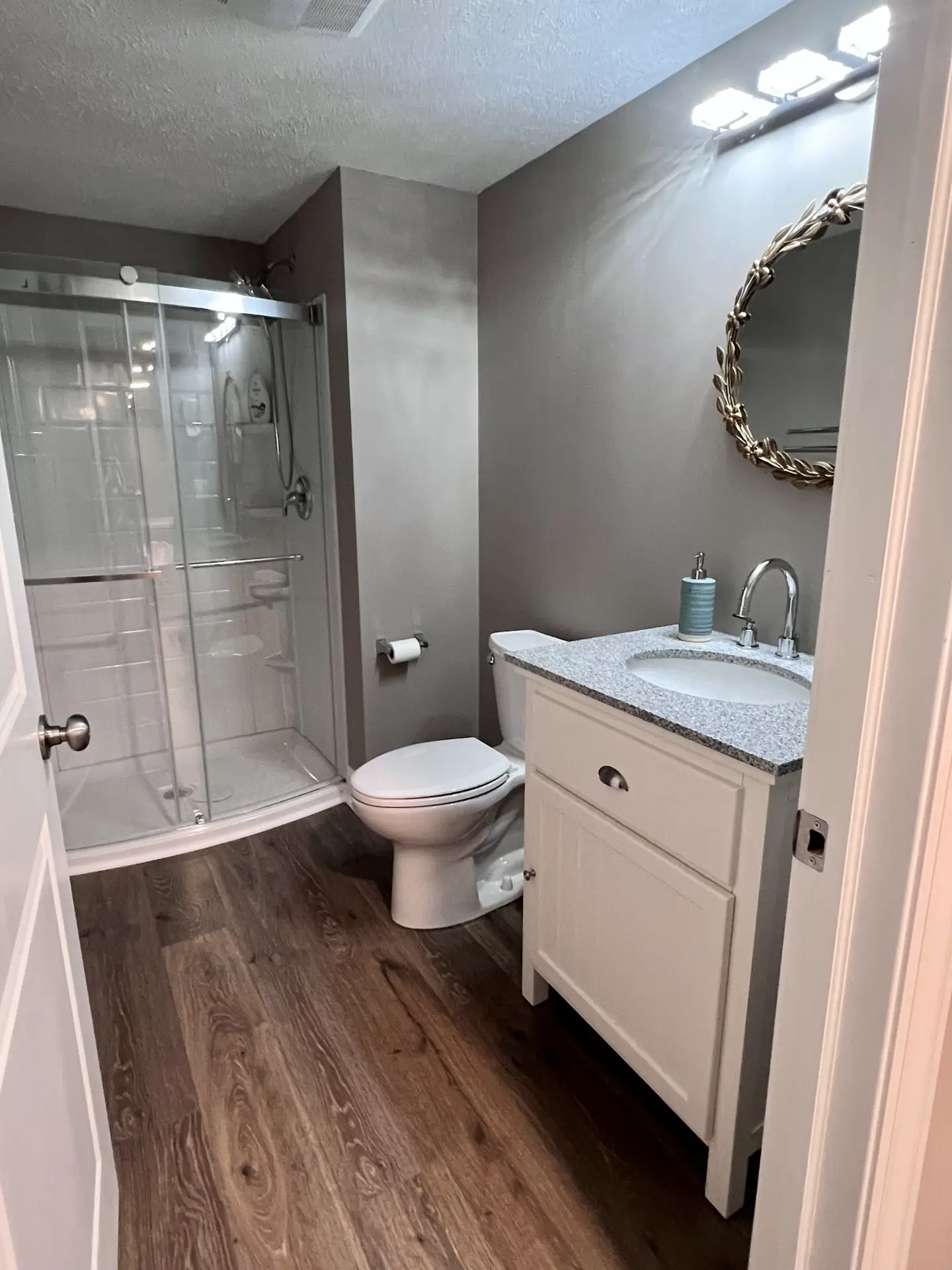
- Bathroom Fixtures & Vanities: $1,000 – $3,500 (Toilet, vanity cabinet, sink, faucet, mirror, shower door, and hardware).
- Permits & Inspections: $250 – $600 (City of Akron permit fees and official inspection visits).
When you add up all these components, it becomes clear why working with an experienced local contractor is so valuable. They coordinate all these moving parts so you don’t end up with tradespeople stepping on each other’s toes!
Smart Ways to Lower Your Basement Bathroom Installation Cost Akron OH
Feeling a bit of sticker shock? Don’t panic just yet! There are plenty of clever strategies you can use to keep your total spending manageable without sacrificing style or long-term quality.
First, try to place your new basement bathroom directly underneath an existing kitchen or upstairs bathroom. Why? Because that is where your home’s main plumbing stack and water supply lines are already located. Keeping your new fixtures close to these existing lines means your plumber has to run far less pipe through walls and floors, saving you hundreds or even thousands on material and labor costs.
Second, consider an upflush toilet system (like Saniflo) if concrete trenching is out of your budget. Upflush toilets sit directly on top of the concrete floor and grind waste before pumping it upward through small pipes. While they may not have the exact traditional look of a standard floor-mounted toilet, they eliminate the need to break open your concrete floor, which slashes labor costs dramatically.
Third, pick your materials wisely. You don’t need expensive natural marble or high-end designer faucets to create a stunning space. Today’s luxury vinyl tile (LVT) flooring looks almost identical to real stone or hardwood, but it is 100% waterproof, warm underfoot, and a fraction of the cost of real tile. Pair LVT with a pre-fabricated acrylic shower surround instead of custom floor-to-ceiling tile work, and you will save a bundle while still enjoying a fresh, clean, modern look.
Is Adding a Basement Bathroom Worth the Money?
Without a doubt, yes! Investing in a basement bathroom is widely considered one of the highest-yielding home improvement projects you can undertake in Northeast Ohio. From a financial perspective, adding finished living space—especially functional living space equipped with its own bathroom—boosts your home’s market appraisal value significantly. Real estate experts generally estimate that you can recover anywhere from 60% to 75% of your installation costs in added equity immediately.
Beyond the numbers, think about the huge boost to your quality of life. No more queueing up outside the upstairs bathroom during busy morning routines. No more guests awkwardly navigating through your private bedrooms to find a washroom during dinner parties. And if you ever decide to turn your basement into a full rental unit or an in-law suite, having a dedicated bathroom is an absolute non-negotiable requirement.
Wrapping It Up
Adding a bathroom to your lower level is a game-changing upgrade that breathes new life into your entire home. While the initial financial commitment might seem significant, knowing the real factors behind the basement bathroom installation cost Akron OH allows you to plan smartly, choose the right materials, and hire trustworthy local professionals who will get the job done right the first time.
Whether you choose a budget-friendly half-bath using smart upflush technology or go all-out with a luxurious full-suite spa, your future self will thank you every time you don’t have to trudge up those basement stairs. So take the leap, start gathering quotes from reputable Akron contractors, and transform your basement into the comfortable, functional space your family deserves!
Frequently Asked Questions
How long does it take to install a basement bathroom in Akron, OH?
On average, a standard basement bathroom installation takes anywhere from two to four weeks of active construction time once permits are approved. If extensive concrete trenching or complex electrical panel upgrades are needed, the timeline may extend slightly to around five weeks.
Do I need a building permit to add a basement bathroom in Akron?
Yes, you definitely need building, plumbing, and electrical permits from the City of Akron or Summit County. Working without permits can cause major headaches when selling your home, invalidate your homeowners insurance in case of leaks, and potentially lead to costly code violation fines.
How do I know if my basement already has rough-in plumbing?
Take a quick walk around your unfinished basement floor. Look for plastic pipe caps or stub-outs protruding slightly from the concrete slab, usually grouped together in one area. If you see two or three capped PVC pipes sticking up out of the floor, your builder likely installed rough-in plumbing when the home was constructed.
What is the absolute cheapest way to put a bathroom in a basement?
The most cost-effective method is building a half-bath (toilet and sink only) right next to your existing main drain stack, using an upflush macerating toilet system. This setup avoids expensive concrete jackhammering, minimizes pipe runs, and keeps fixture costs low, often keeping your total bill under $7,000.
Will adding a basement bathroom increase my property taxes in Summit County?
Yes, adding finished square footage and functional fixtures to your home typically increases its assessed market value, which can slightly increase your local property taxes. However, the substantial increase in home equity and resale desirability far outweighs the modest tax adjustment.
“`